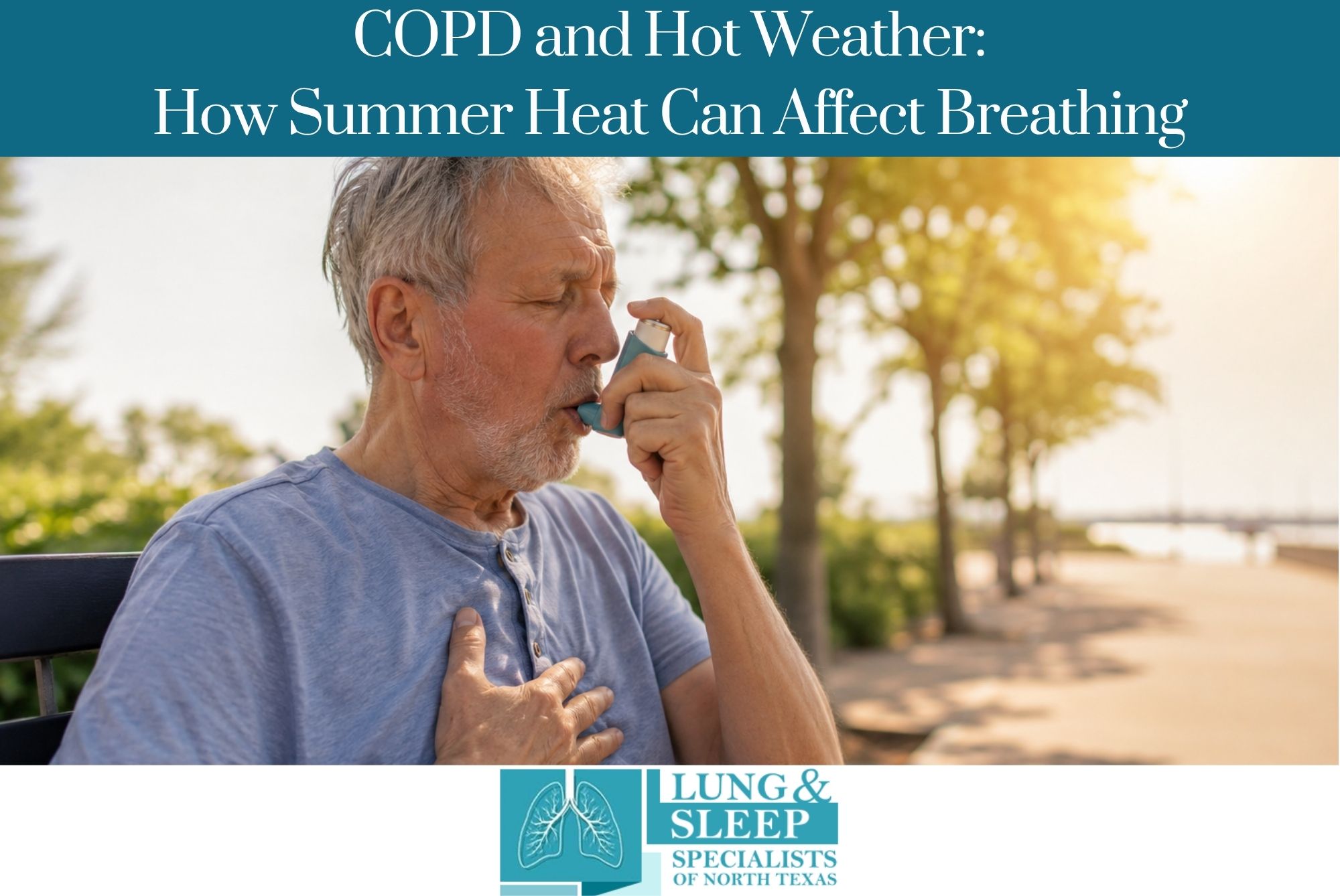
For many people, summer means sunshine, outdoor activities, and time spent with family and friends. However, for individuals living with Chronic Obstructive Pulmonary Disease (COPD), the hottest months of the year can bring additional challenges.
At Lung & Sleep Specialists, we frequently help patients manage COPD symptoms during periods of extreme heat and humidity. Understanding how weather affects your lungs can help you stay healthier and avoid unnecessary flare-ups throughout the summer.
Understanding COPD
COPD is a chronic lung disease that makes it difficult to move air in and out of the lungs. It includes conditions such as chronic bronchitis and emphysema and is often associated with a history of smoking, although other factors may contribute as well.
Common COPD symptoms include:
- Shortness of breath
- Chronic cough
- Wheezing
- Excess mucus production
- Fatigue
Because COPD affects lung function, environmental factors can have a significant impact on symptoms.
Why Summer Heat Can Be Difficult for COPD Patients
Hot weather increases the body’s workload. To stay cool, the body uses more energy and requires additional oxygen. For individuals whose lungs are already compromised, this extra demand can make breathing more difficult.
Increased Oxygen Demand
As temperatures rise, the body works harder to regulate internal temperature. This increased effort requires more oxygen and places additional stress on the respiratory system.
Humidity Makes Air Feel Heavier
Humidity adds moisture to the air, making it feel thicker and more difficult to breathe. Many COPD patients report worsening shortness of breath during humid conditions.
Air Pollution and Ozone
Summer often brings elevated ozone levels and poorer air quality. These pollutants can irritate the airways and trigger symptom flare-ups.
Wildfire Smoke
In many regions, wildfire season coincides with summer. Smoke particles can penetrate deep into the lungs and worsen respiratory symptoms.
Common Signs of Heat-Related COPD Flare-Ups
Patients should watch for:
- Increased shortness of breath
- More frequent coughing
- Wheezing
- Chest tightness
- Increased mucus production
- Greater reliance on rescue inhalers
Prompt attention to worsening symptoms can help prevent serious complications.
Practical Strategies for Managing COPD During Summer
Stay Indoors During Peak Heat
The hottest part of the day typically occurs between late morning and early evening. Limit outdoor activities during these hours whenever possible.
Monitor Air Quality
Check daily Air Quality Index (AQI) reports before spending time outdoors.
Use Air Conditioning
Air-conditioned environments help reduce heat exposure and improve indoor air quality.
Stay Hydrated
Drinking plenty of water helps keep mucus thinner and easier to clear from the airways.
Follow Your Treatment Plan
Continue taking maintenance medications exactly as prescribed.
Exercise Safely
Physical activity remains important for overall health and lung function.
To exercise safely during summer:
- Walk early in the morning
- Choose indoor exercise options on hot days
- Take frequent breaks
- Carry prescribed rescue medications
When to Contact a Pulmonary Specialist
Seek medical attention if you experience:
- Significant worsening of shortness of breath
- Increased wheezing
- Fever or signs of infection
- Difficulty performing daily activities
- Reduced response to inhalers
Breathe Easier This Summer
Summer weather can present unique challenges for people living with COPD, but proactive management can make a significant difference. By monitoring environmental conditions, following your treatment plan, and recognizing early warning signs, you can stay active and enjoy the season more comfortably.
At Lung & Sleep Specialists, our pulmonary team is committed to helping patients manage COPD and other chronic lung conditions through every season of the year.