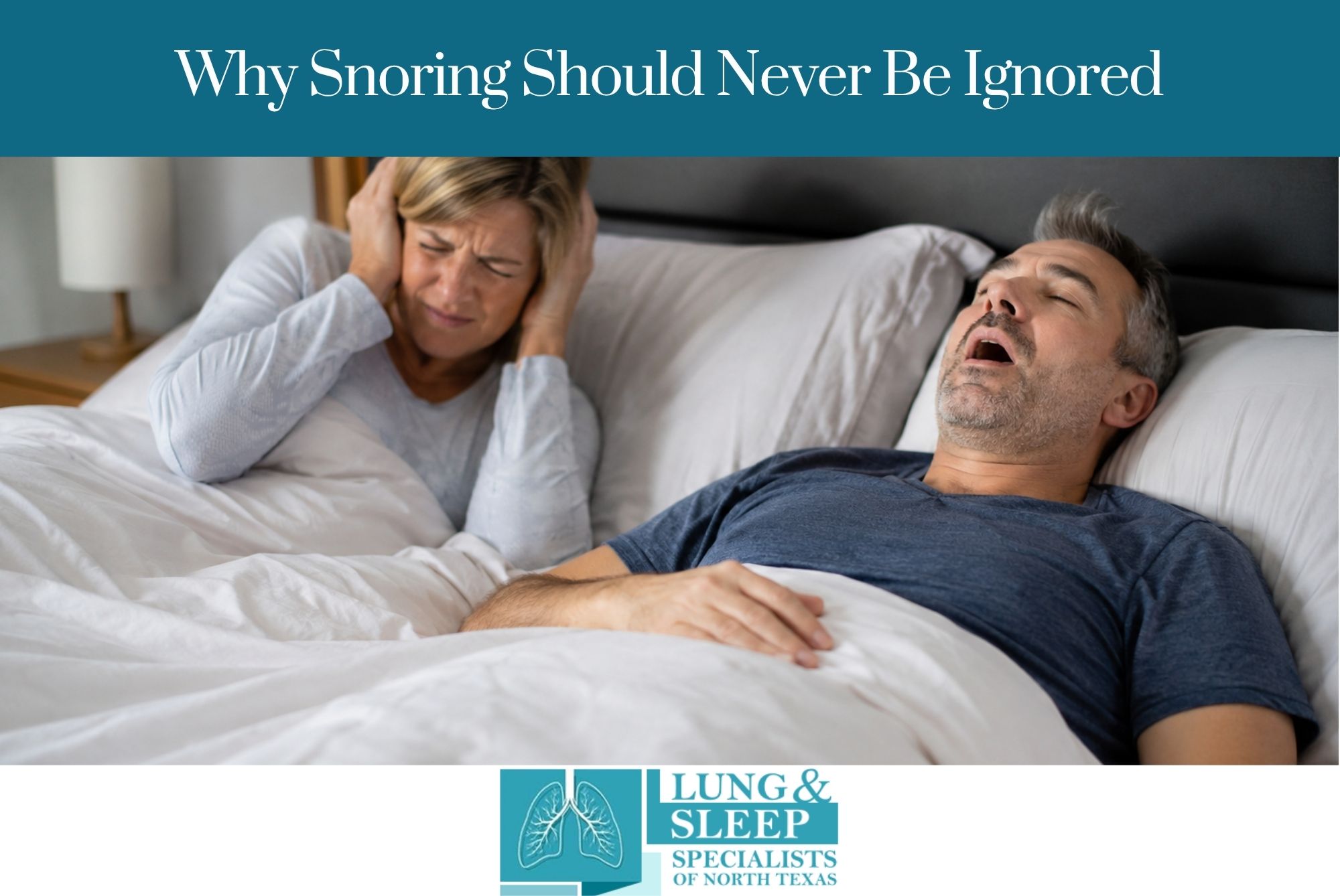
Snoring is often viewed as a harmless annoyance or the subject of family jokes. However, chronic snoring can sometimes indicate a serious underlying sleep disorder.
At Lung & Sleep Specialists, many patients initially seek care because of snoring and later discover they have obstructive sleep apnea, a condition that can significantly affect overall health.
What Causes Snoring?
Snoring occurs when airflow becomes partially blocked while sleeping.
As air moves through a narrowed airway, soft tissues vibrate and create the familiar snoring sound.
Factors that contribute to snoring include:
- Excess weight
- Nasal congestion
- Alcohol consumption
- Sleep position
- Enlarged tonsils
- Sleep apnea
Occasional snoring may not be concerning, but persistent snoring warrants attention.
When Snoring Becomes a Medical Concern
Certain symptoms suggest that snoring may be linked to sleep apnea.
Watch for:
- Pauses in breathing during sleep
- Gasping or choking episodes
- Morning headaches
- Excessive daytime fatigue
- Difficulty concentrating
- Irritability or mood changes
These symptoms indicate that breathing may be repeatedly interrupted throughout the night.
Understanding Obstructive Sleep Apnea
Sleep apnea occurs when the airway repeatedly collapses during sleep.
Each breathing interruption reduces oxygen levels and forces the brain to briefly awaken the body to restore airflow.
These interruptions can occur dozens or even hundreds of times per night.
Health Risks of Untreated Sleep Apnea
Untreated sleep apnea has been linked to:
- High blood pressure
- Heart disease
- Stroke
- Type 2 diabetes
- Depression
- Increased accident risk
Because symptoms develop gradually, many patients remain undiagnosed for years.
How Sleep Apnea Is Diagnosed
A sleep study is used to evaluate breathing patterns, oxygen levels, and sleep quality.
Testing may be performed:
- At home
- In a sleep laboratory
Both options provide valuable information for diagnosis and treatment planning.
Effective Treatment Options
Treatment may include:
- CPAP therapy
- Oral appliance therapy
- Weight management
- Positional therapy
- Treatment of nasal obstruction
Many patients notice dramatic improvements in energy levels and sleep quality after beginning treatment.
Better Sleep Starts with Answers
If you or a loved one snores regularly, don’t assume it’s harmless. Early evaluation can identify sleep apnea and reduce the risk of long-term health complications.
At Lung & Sleep Specialists, we provide comprehensive sleep evaluations and individualized treatment plans to help patients achieve healthier, more restorative sleep.