Summer is one of the most popular times of year for vacations, family visits, and outdoor adventures. Whether you’re planning a weekend getaway or an extended trip, maintaining your health should remain a priority. For patients with sleep apnea, travel can introduce challenges that make it tempting to skip treatment—but doing so can have significant consequences.
At Lung & Sleep Specialists, we often remind patients that sleep apnea doesn’t take a vacation just because you do. Consistent treatment is one of the most important steps you can take to protect your health, improve sleep quality, and enjoy your travels to the fullest.
What Is Sleep Apnea?
Obstructive sleep apnea (OSA) occurs when the muscles in the throat relax during sleep, causing the airway to narrow or collapse. These breathing interruptions may last several seconds and can occur dozens or even hundreds of times throughout the night.
When breathing stops, oxygen levels decrease and the brain briefly wakes the body to restore airflow. While many people don’t remember these awakenings, they prevent the body from reaching the deep stages of restorative sleep.
Common symptoms include:
- Loud snoring
- Gasping or choking during sleep
- Morning headaches
- Dry mouth upon waking
- Daytime fatigue
- Difficulty concentrating
- Irritability or mood changes
Sleep apnea affects millions of Americans and often goes undiagnosed for years.
Why Consistent Treatment Matters
Many patients wonder whether missing CPAP therapy for a few nights while traveling will make a difference. Unfortunately, symptoms often return quickly when treatment is interrupted.
Without treatment, sleep apnea can lead to:
Daytime Sleepiness
Interrupted sleep leaves the body exhausted. Fatigue can affect concentration, reaction time, and overall enjoyment of your vacation.
Increased Accident Risk
Sleep deprivation contributes to motor vehicle accidents and injuries. This is especially concerning when driving long distances or navigating unfamiliar destinations.
Elevated Blood Pressure
Repeated drops in oxygen levels place stress on the cardiovascular system, increasing blood pressure and heart workload.
Reduced Sleep Quality
Even if you spend enough hours in bed, untreated sleep apnea prevents restorative sleep, leaving you feeling unrefreshed.
Why Travel Can Worsen Sleep Apnea
Travel introduces several factors that can make sleep apnea symptoms more noticeable.
Changes in Sleep Schedules
Vacation often means later bedtimes, earlier wake-up calls, or crossing time zones. These schedule disruptions can worsen sleep quality and make symptoms more noticeable.
Alcohol Consumption
Many vacations involve social gatherings and celebrations. Alcohol relaxes the muscles of the throat and can significantly worsen snoring and airway obstruction.
Sleeping in Unfamiliar Environments
Different mattresses, pillows, room temperatures, and noise levels can make it more difficult to achieve restful sleep.
Allergies and Congestion
Traveling to new locations may expose you to unfamiliar allergens. Nasal congestion can increase airway resistance and worsen sleep-disordered breathing.
Traveling with a CPAP Machine
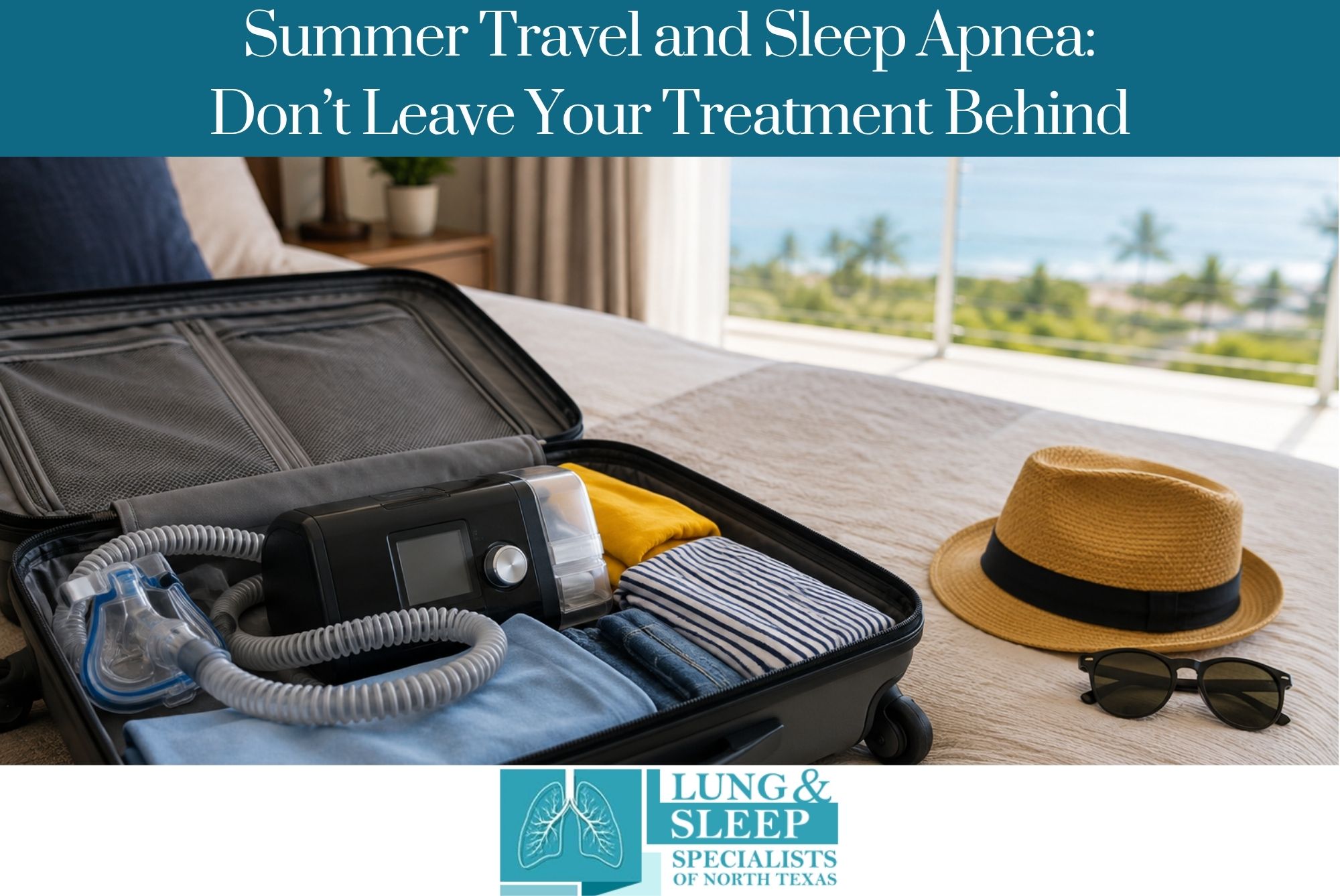
The good news is that traveling with CPAP equipment has become easier than ever.
Pack It Properly
Always carry your CPAP machine with you rather than checking it with luggage. Most airlines classify CPAP devices as medical equipment and allow them onboard.
Bring Extra Supplies
Pack:
- Extra mask cushions
- Filters
- Tubing
- Power cords
- Extension cords if needed
Having backups can prevent treatment interruptions if equipment becomes damaged.
Plan for Power Access
If you’re camping or traveling internationally, make sure you understand your power requirements ahead of time.
Continue Your Routine
Try to maintain regular sleep and wake times whenever possible. Consistency helps support healthy sleep patterns.
Summer Travel Tips for Better Sleep
In addition to using your CPAP machine, these habits can improve sleep quality while traveling:
- Stay hydrated
- Avoid heavy meals before bedtime
- Limit alcohol consumption
- Prioritize adequate sleep
- Create a comfortable sleep environment
Signs You May Need a Sleep Evaluation
If you haven’t been diagnosed with sleep apnea but experience loud snoring, excessive fatigue, morning headaches, or witnessed pauses in breathing, it may be time to schedule a sleep study.
Enjoy Your Summer Without Sacrificing Your Health
Vacations should leave you feeling rested and energized. By staying committed to your sleep apnea treatment and practicing healthy sleep habits, you can enjoy your travels while protecting your long-term well-being. At Lung & Sleep Specialists, we provide comprehensive sleep evaluations and personalized treatment plans to help patients achieve healthier, more restorative sleep year-round.