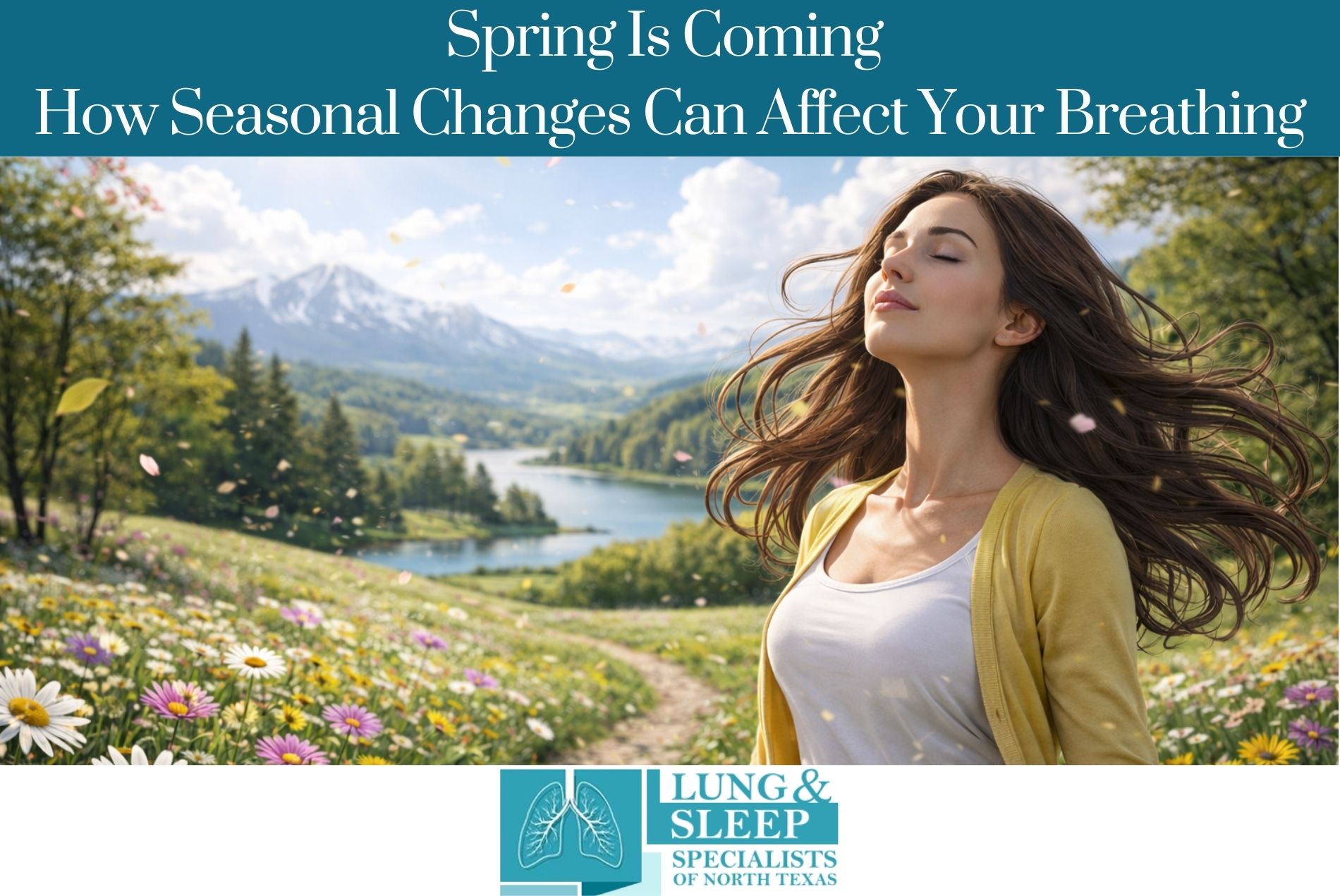
As winter transitions into spring, many patients at Lung & Sleep Specialists notice changes in their breathing. Warmer temperatures bring longer days and blooming plants, but they can also introduce new respiratory challenges, especially for people with asthma, COPD, or allergies.
Why Spring Can Trigger Breathing Problems
During early spring, pollen levels begin to rise while temperatures fluctuate dramatically. These changes can irritate the airways and increase inflammation in people with underlying lung conditions.
Common triggers include:
-
Tree and plant pollen
-
Wind carrying airborne allergens
-
Temperature swings
-
Increased outdoor activity after winter
These factors can lead to coughing, wheezing, or shortness of breath.
Symptoms to Watch For
Patients may notice:
-
Increased wheezing
-
Persistent coughing
-
Shortness of breath during outdoor activity
-
Chest tightness
-
Increased use of inhalers
For individuals with asthma or COPD, seasonal triggers can lead to flare-ups if symptoms are not properly managed.
Managing Spring Respiratory Triggers
To protect your lungs this season:
-
Monitor local pollen forecasts
-
Keep windows closed on high pollen days
-
Use air filters or purifiers indoors
-
Take prescribed medications consistently
-
Shower and change clothes after outdoor activities
When to See a Pulmonary Specialist
If breathing symptoms worsen with seasonal changes or interfere with daily activities, a pulmonary evaluation can help identify triggers and adjust treatment to keep symptoms under control.