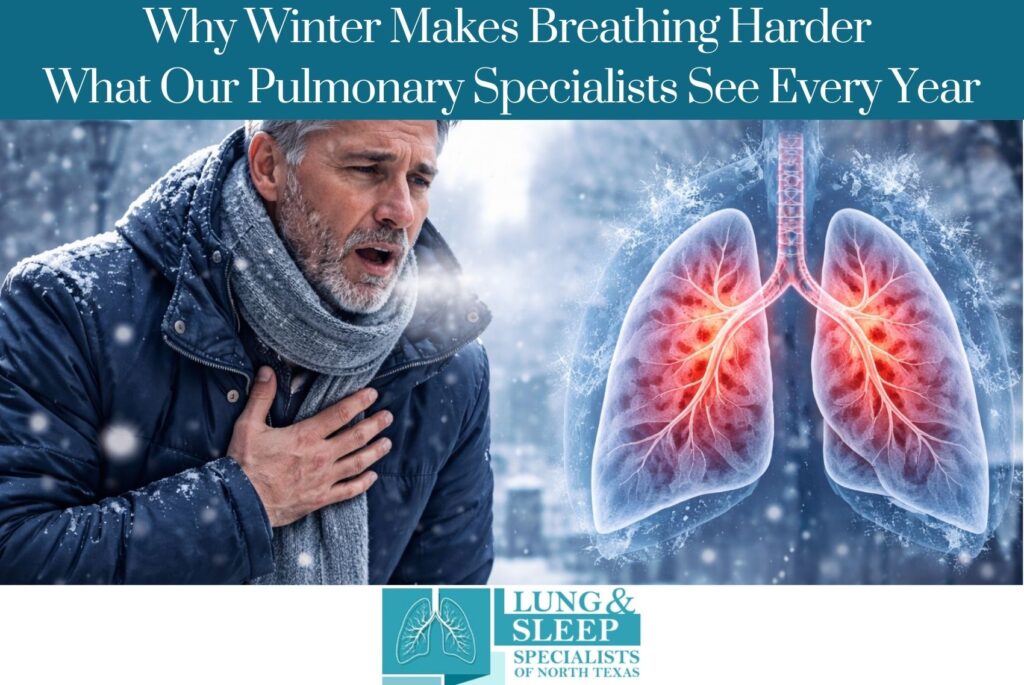
At Lung & Sleep Specialists, winter is one of the busiest times of year for patients with asthma, COPD, chronic bronchitis, and other lung conditions. Cold temperatures, dry air, and seasonal respiratory infections often lead to worsening symptoms and unexpected flare-ups.
How Cold Weather Affects Your Lungs
Cold, dry air can irritate the lining of the airways, causing them to narrow and produce excess mucus. This makes breathing more difficult and can trigger coughing, wheezing, and shortness of breath — especially in patients with underlying pulmonary disease.
Indoor heating systems also reduce humidity levels, further drying out the airways and increasing airway sensitivity.
Common Winter Respiratory Symptoms We Treat
- Increased shortness of breath
- Persistent coughing
- Chest tightness or wheezing
- More frequent use of rescue inhalers
- Fatigue related to poor oxygen exchange
Winter is also peak season for flu, RSV, COVID-19, and pneumonia — all of which can lead to lingering lung complications.
How to Protect Your Lung Health This Winter
Our pulmonary specialists recommend:
- Wearing a scarf or mask outdoors to warm inhaled air
- Using a humidifier at home
- Staying current with flu and pneumonia vaccinations
- Avoiding smoke, strong fragrances, and indoor irritants
- Taking maintenance inhalers exactly as prescribed
When to Schedule a Pulmonary Evaluation
If your breathing symptoms worsen during cold weather, or if you experience frequent infections, coughing, or wheezing, a pulmonary evaluation can help identify the cause and adjust your treatment plan before symptoms become severe.